Building Resilient AI Routing Gateways with Multi-Provider Fallback Xây Dựng Cổng Định Tuyến AI Bền Vững Với Cơ Chế Dự Phòng Đa Nhà Cung Cấp
Architectural patterns for multi-model fallback, token-aware context pruning, and credential pool rotation in mission-critical AI coding agent workflows. Các mẫu kiến trúc dự phòng đa mô hình, tự động cắt tỉa ngữ cảnh theo token và luân chuyển kho API key cho các quy trình AI coding agent trọng yếu.
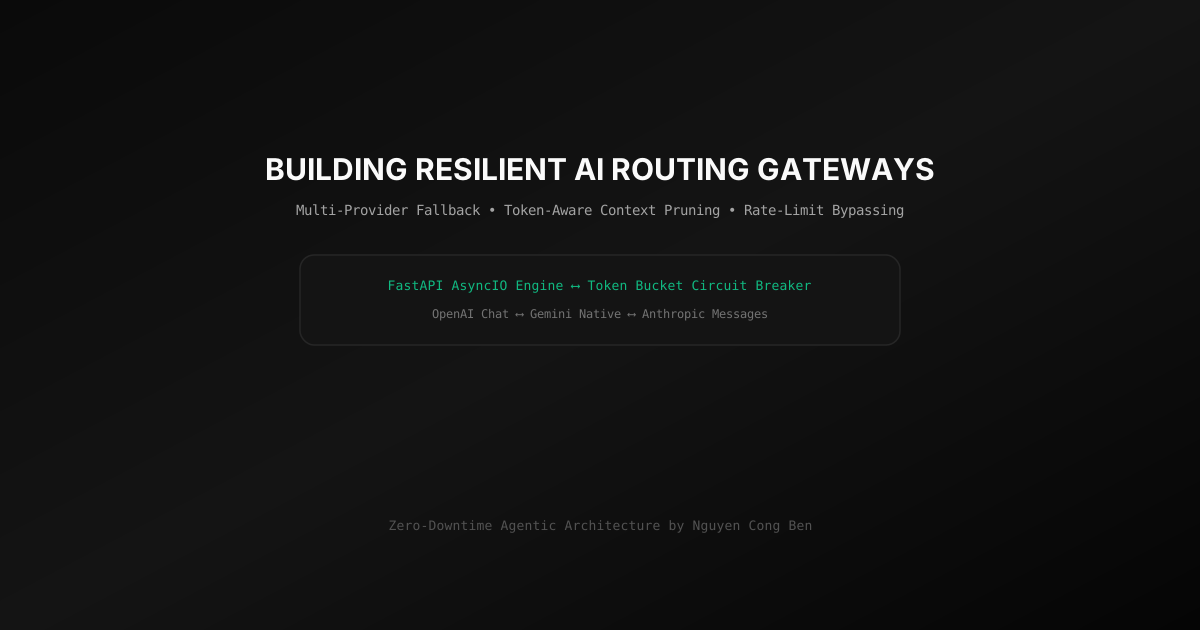
Building Resilient AI Routing Gateways with Multi-Provider Fallback
Modern autonomous coding agents (such as Codex, Claude Code, Antigravity, and Aider) rely on unbroken model availability. However, production model endpoints inevitably suffer from transient failures: HTTP 429 rate limits, sudden capacity depletion, token quota exhaustion, or regional network degradation.
In this article, I share the core architectural patterns developed while engineering Omni Gateway to achieve zero-downtime AI agent execution.
The Fragility of Single-Provider Agentic Workflows
When an autonomous agent executes a multi-step refactoring plan, an unhandled rate limit at Step 8 invalidates the entire trajectory. Forcing agents to restart burns tokens and degrades developer velocity.
A resilient routing gateway must provide three core guarantees:
- Transparent Protocol Translation: Accept any client standard (OpenAI Chat, Gemini Native, Anthropic Messages) without breaking client tool calls.
- Deterministic Token-Aware Sliding Windows: Prevent exceeding maximum context limits by trimming older turns strictly at turn boundaries while preserving system instructions.
- Smart Multi-Provider Circuit Breaking: Detect upstream failure in <50ms and fail over to alternative models seamlessly.
Circuit Breakers and Credential Reservation
To avoid hot-spotting single credentials during high-concurrency bursts, Omni Gateway utilizes an in-memory token-bucket reservation system:
async def reserve_and_route(request_payload: dict, provider_pool: list[ProviderCredential]):
    for credential in provider_pool:
        if credential.is_healthy() and not credential.is_rate_limited():
            try:
                async with credential.acquire_slot():
                    return await execute_upstream_call(credential, request_payload)
            except UpstreamRateLimitError:
                credential.mark_cooldown(seconds=60)
                continue # Immediately attempt next candidate in the pool
    raise GatewayExhaustionError("All provider credentials currently exhausted")
Token Pruning Without Context Corruption
Many naive proxies blindly truncate string length, slicing JSON payloads or system instructions in half.
The correct approach requires turn-aware structural normalization:
- Never remove system prompts (
role: system) or tool function definitions (tools). - Group conversation history into atomic user/assistant message pairs.
- Prune strictly from the oldest message pairs forward until total token estimation fits safely within the target model’s sliding budget.
By enforcing these constraints at the gateway layer, coding agents maintain seamless conversational coherence across all underlying model backends.
Xây Dựng Cổng Định Tuyến AI Bền Vững Với Cơ Chế Dự Phòng Đa Nhà Cung Cấp
Các AI coding agent tự trị hiện đại (như Codex, Claude Code, Antigravity và Aider) phụ thuộc sống còn vào tính khả dụng liên tục của mô hình ngôn ngữ lớn. Tuy nhiên, trong thực tế, các endpoint AI không thể tránh khỏi các lỗi gián đoạn: vượt hạn ngạch HTTP 429 (rate limit), máy chủ quá tải đột ngột, cạn kiệt token hoặc suy giảm đường truyền mạng theo khu vực.
Trong bài viết này, tôi chia sẻ các mẫu kiến trúc cốt lõi được đúc kết khi phát triển Cổng Omni Gateway nhằm duy trì sự bền bỉ cho quy trình AI agent.
Sự Dễ Vỡ Của Hệ Thống Khi Phụ Thuộc Vào Một Nhà Cung Cấp
Khi một agent tự trị đang thực hiện chuỗi tái cấu trúc mã nguồn gồm nhiều bước, chỉ cần một lỗi Rate Limit ở bước thứ 8 sẽ làm gián đoạn toàn bộ tiến trình. Việc phải khởi động lại từ đầu không chỉ làm lãng phí token mà còn giảm tốc độ phát triển của kỹ sư.
Một cổng định tuyến bền bỉ phải đáp ứng 3 nguyên tắc nền tảng:
- Chuyển đổi giao thức trong suốt: Tiếp nhận mọi chuẩn client (OpenAI Chat, Gemini Native, Anthropic Messages) mà không làm hỏng các lệnh gọi công cụ (Tool Call).
- Cắt tỉa ngữ cảnh token theo sliding window chuẩn xác: Tránh vượt quá giới hạn ngữ cảnh của mô hình bằng cách cắt tỉa các lượt hội thoại cũ theo đúng ranh giới cặp tin nhắn, luôn bảo tồn chỉ dẫn hệ thống.
- Ngắt mạch thông minh (Circuit Breaker): Phát hiện sự cố máy chủ phía trên trong dưới 50ms và tự động chuyển đổi sang mô hình dự phòng mà client không hề nhận biết.
Cơ Chế Ngắt Mạch & Đặt Trước Tài Nguyên (Credential Reservation)
Để tránh tình trạng nghẽn cổ chai tập trung vào một API key duy nhất khi có lượng truy cập đồng thời lớn, Omni Gateway sử dụng cơ chế giữ chỗ token-bucket trong bộ nhớ:
async def reserve_and_route(request_payload: dict, provider_pool: list[ProviderCredential]):
    for credential in provider_pool:
        if credential.is_healthy() and not credential.is_rate_limited():
            try:
                async with credential.acquire_slot():
                    return await execute_upstream_call(credential, request_payload)
            except UpstreamRateLimitError:
                credential.mark_cooldown(seconds=60)
                continue # Ngay lập tức thử khóa tiếp theo trong nhóm dự phòng
    raise GatewayExhaustionError("Toàn bộ khóa dự phòng hiện đang cạn kiệt hạn ngạch")
Cắt Tỉa Token An Toàn Không Gây Lỗi Dữ Liệu
Nhiều proxy đơn giản thường cắt ngắn chuỗi văn bản một cách thô bạo, dẫn đến việc làm rách cấu trúc JSON hoặc cắt đôi prompt hệ thống.
Giải pháp chuẩn mực đòi hỏi chuẩn hóa cấu trúc theo lượt hội thoại:
- Tuyệt đối không xóa chỉ dẫn hệ thống (
role: system) và định nghĩa công cụ (tools). - Gom nhóm lịch sử hội thoại thành các cặp tin nhắn nguyên tử (User / Assistant).
- Cắt tỉa tuần tự từ cặp tin nhắn cũ nhất trở đi cho đến khi tổng số token nằm an toàn trong ngưỡng giới hạn của mô hình.
Việc kiểm soát chặt chẽ các nguyên tắc này tại tầng cổng định tuyến giúp coding agent duy trì mạch suy nghĩ liền mạch và ổn định tuyệt đối trên mọi nền tảng mô hình backend.